Cash App Banking is a simple yet sophisticated mobile-based banking channel where you can manage all your money straight from your smartphone. Cash App Banking makes it easy for millions of Americans to do things like get paid up to two days early with direct deposits, instantly deposit their checks, and spend the funds in the account anywhere they want.
If you need a convenient way to send money or pay bills or receive money through direct deposit in a faster, more secure method, the Cash App use is your answer. It even comes with a Cash Card to use anywhere or for ATM access.
Ideal for anyone who wants to use modern banking, Cash App Banking offers technology and financial opportunity. Find out what you can do with Cash App Banking to make your money life simple and easy, with total control of your finances anytime, anywhere.
What Is Cash App Account?
Cash App Banking is a straightforward yet advanced bank account you can manage from your phone. Cash App Banking is designed to make it effortless for millions of Americans to do things such as receive paychecks up to two days early through direct deposits, deposit checks immediately, and access the money in their account everywhere they choose.
If you are looking for a quicker and more reliable way of sending money or paying bills, or to receive money through direct deposit in the fastest way possible, then Cash App is your solution. The account also includes a Cash Card for use anywhere or ATM access. Made for those who want low fees, the convenience of bank finance, and great rewards.
Perfect for anyone looking to use modern banking. Learn more about what you can do with Cash App Banking to keep your money life simple and easy while keeping total control of your finances—anytime, anywhere.
How Cash App Banking Works
Cash App Banking functions similarly to an all-in-one digital banking service and offers a unique account number and routing number to let you deposit, send, receive, and spend money like in any other bank. Users can load money by linking an external bank or debit card, and they will receive direct deposits from things like paychecks or tax returns instantly into their
Cash App balance, with limits set at up to $25,000 per deposit and $50,000 per day. A customizable Visa debit card linked to the Cash App balance, known as a Cash Card, also provides users access to use their funds online or in stores or at ATMs. It is a snap to send money with just a dollar sign (#), cash, or a phone number, and funds arrive instantly on the balance.
Security features such as PIN protection, multiple-factor authentication, and transaction alerts secure accounts. They can also make transfers to external banks, benefit from instant deposits, and cash out at retail locations. This makes Cash App a good banking option for managing day-to-day spending and even saving.
Cash App vs Traditional Banks
Cash App
Cash App is an easy and quick mobile-first fintech alternative to traditional banking through its peer-to-peer payment and transfer service and the Cash Card, which includes a free debit card that can be used like a regular bank-funded debit card with helpful tools for saving on fees without unnecessary costs or hidden charges. It offers high-yield savings of up to 3.75% APY and basic investing in stocks or Bitcoin, but no physical branches, loans, checks, or the comprehensive customer service provided at traditional banks.
Traditional Banks
Conventional banks provide full-service offerings, including in-branch help, higher transaction limits, and the like, as well as cash deposits, credit products, and wealth management, often for a monthly fee unless a certain minimum balance is kept with overdraft charges and larger ATM networks. Cash App is best for quick purchases, and when using apps like Chime, traditional banks are best when planning complex financial matters.
Benefits of Cash App’s Banking
Enable Early Direct Deposits
Enable direct deposit on Cash App for paychecks up to two days early that may be FDIC-insured in accounts up to $250,000 through bank partners such as Sutton Bank. Get up to $25k per deposit instantly, and bypass your bank’s lengthy holds for more control and faster access to cash. Ideal for digital finance users.
Access Fee-Free Spending
Receive a customized Cash Card debit Visa for purchases and ATM withdrawals with automatic reimbursement on qualifying deposits and no monthly fees or minimums. Get an overdraft up to $200 and a high-yield savings account with 3.75% APY if you deposit at least $300 per month.
Instant Transfers and Boosts
Receive/send funds using $Cashtag, auto-deposit the desired amount for Bitcoin, or round up purchases for auto-saving. Use Boosts to receive discounts from your favorite retailers. No overdraft fees compared to an average of $250 a year with traditional banks for mobile-first security and convenience.
Why Cash App Uses Different Banks
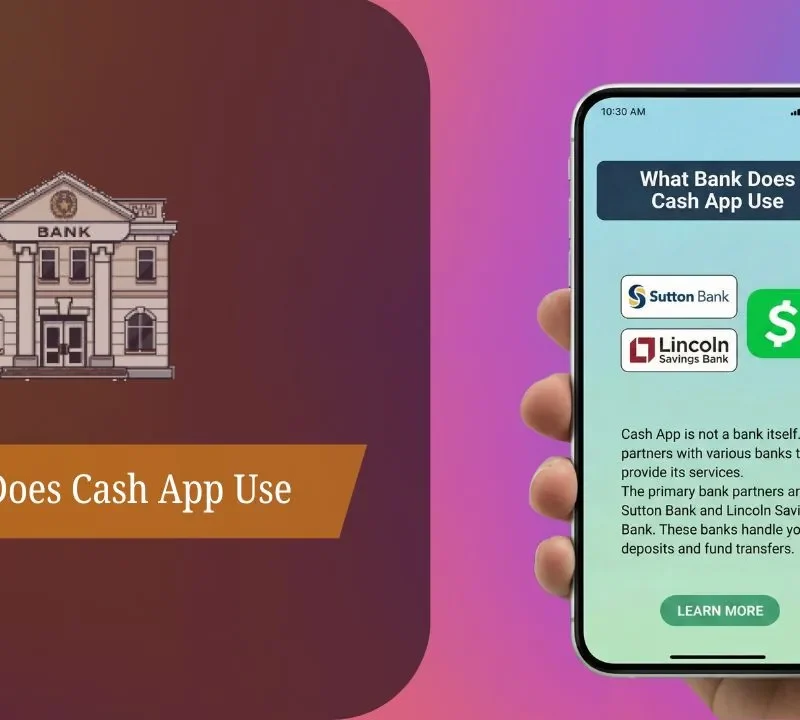
Cash App has multiple banks because it’s a fintech company that works with a network of FDIC-insured banks to offer its financial services, rather than being classified as a bank itself. Cash App’s prepaid debit card, called the Cash Card, is given to users of Sutton Bank; it enables them to spend and withdraw money from their Cash App account.
In the meantime, Wells Fargo offers direct deposit and check account balances. It gives users the option to download paychecks and move money safely. This approach of having multiple banking partners allows Cash App use to partition functions between banks to ensure it complies with federal regulations and enjoys FDIC insurance on its users’ funds.
It makes it easier for Cash App to efficiently scale its services and be able to offer the sort of seamless banking features you would expect without the need of holding a bank charter.
FAQs
1. What bank does Cash App use for direct deposit?
For direct deposits, Cash App uses Lincoln Savings Bank.
2. What bank powers the Cash App Cash Card?
Cash App Cash Card is issued by Sutton Bank.
3. How do I find my Cash App bank name?
Click on the banking tab > direct deposit—there you will find the bank name and routing number.
4. Does Cash App have its own bank?
No. Cash App is used by banks such as Lincoln Savings Bank and Sutton Bank.
5. Is Lincoln Savings Bank FDIC-insured?
Yes. Lincoln Savings Bank is FDIC insured, protecting eligible deposits up to $250,000.
6. Can I use Cash App without linking a bank?
Yes, though you need to connect a bank or card for withdrawals.
7. Why do I see Sutton Bank on my Cash Card?
Since the Cash App Cash Card is issued and controlled by Sutton Bank.
8. Where do I find Cash App’s routing number?
Open Banking > Direct Deposit to view your routing and account number.